Chapter 14
The Fretboard: The Major Scale on a single string
Try playing the Major Scale on a single string. Here it is on the low E string. Notice how it follows the 221-2221 pattern? When you arrive at the 12th fret, it’s a lighter shade of red, not a totally new color.
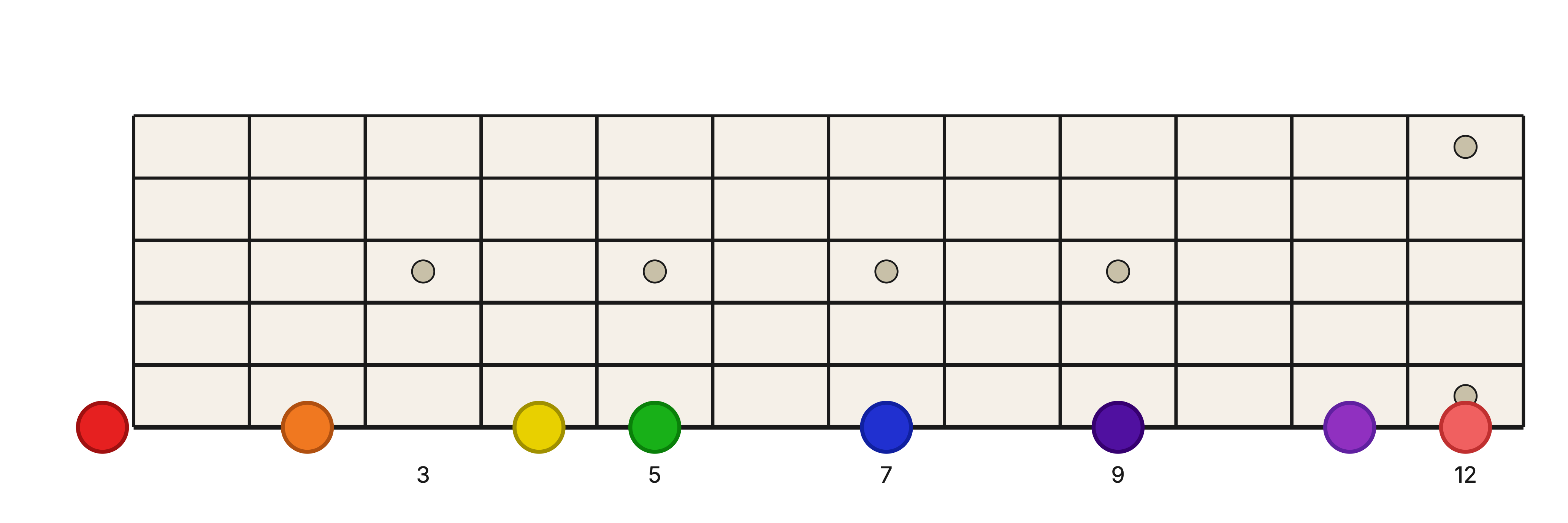
On a single string, the formula is just fret-counting. Starting on the open string, move up 2 frets, then 2 more, then 1, then 2, 2, 2, and a final 1. That last step lands you on the 12th fret (the double-dot fret) which is why the 8th note is the “lighter shade” of the note you started on.
Why learn it on one string? Because it lays the whole scale out in a straight line, so you can see and hear the 221-2221 pattern without your hand jumping around between strings. It’s a great way to learn the pattern but it’s not really how you’ll usually play it. Hopping up and down a single string for a whole song would be clumsy. After you name the C Major scale in the next chapter, the open-position Scale Lab will spread it across nearby strings. For now, one string keeps things nice and clear.
Try a different starting note (a different tonic note). It can be anywhere! Here are 3 more examples.
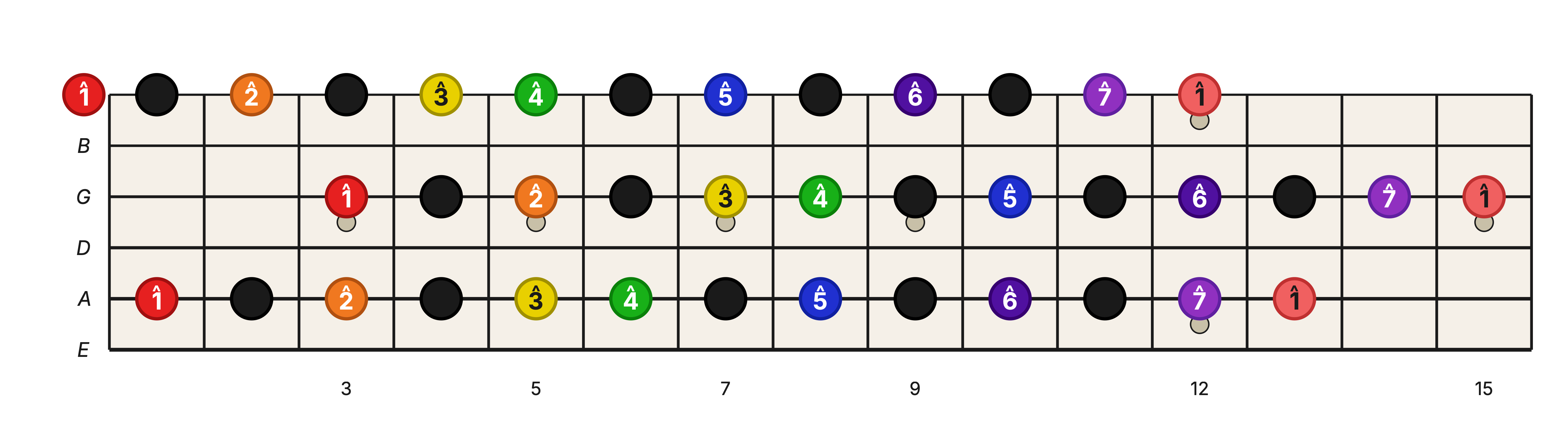
The important thing is that you can hear the unique sound of the Major Scale no matter where you start on the guitar.
This works because the Major Scale is a movable pattern. The fret-distances (221-2221) stay the same no matter where you begin, so the same shape gives you a Major Scale anywhere on the neck.
As you play up the string, sing along: Do, Re, Mi, Fa, So, La, Ti, Do. Hearing those syllables while your fingers find the notes is the start of training your ear...something we’ll come back to later.