Chapter 15
Music Theory: The C Major Scale
Let’s name some notes. The first Major scale to learn is the C Major scale. We use seven letters of the alphabet to name notes: A, B, C, D, E, F, and G. The musical alphabet begins with A, but this scale begins with C because C is its tonic. When we reach G, the alphabet loops back to A. If you are wondering why seven letter names describe twelve fretboard positions, the Level 1 FAQ explains why.
When writing or playing scales, we like to play the tonic (the first note of the scale) again to provide a sense of completeness. Therefore, the C Major scale would be played as C–D–E–F–G–A–B–C. That last C is the same note as the first C, just a “lighter shade” of it (it’s where the names start over again).
Remember that the generic Major Scale pattern (in theory) looks like this. The numbered notes are called “scale degrees”. In college-level textbooks, they will have a caret above each number: 1̂, 2̂, 3̂, etc.

Again, there will always be a half step between the 3rd note and the 4th note of the scale. Notice how “3” and “4” are right next to each other? Additionally, there is a half step when going from the 7th note of the scale to the 1st note (at a “lighter shade”) again.
With that in mind, when we apply the names to the notes (starting with C)…

…half steps between E–F and B–C just naturally occur. Remember that important fact. Half steps naturally occur between the E–F notes and the B–C notes.
Key of C
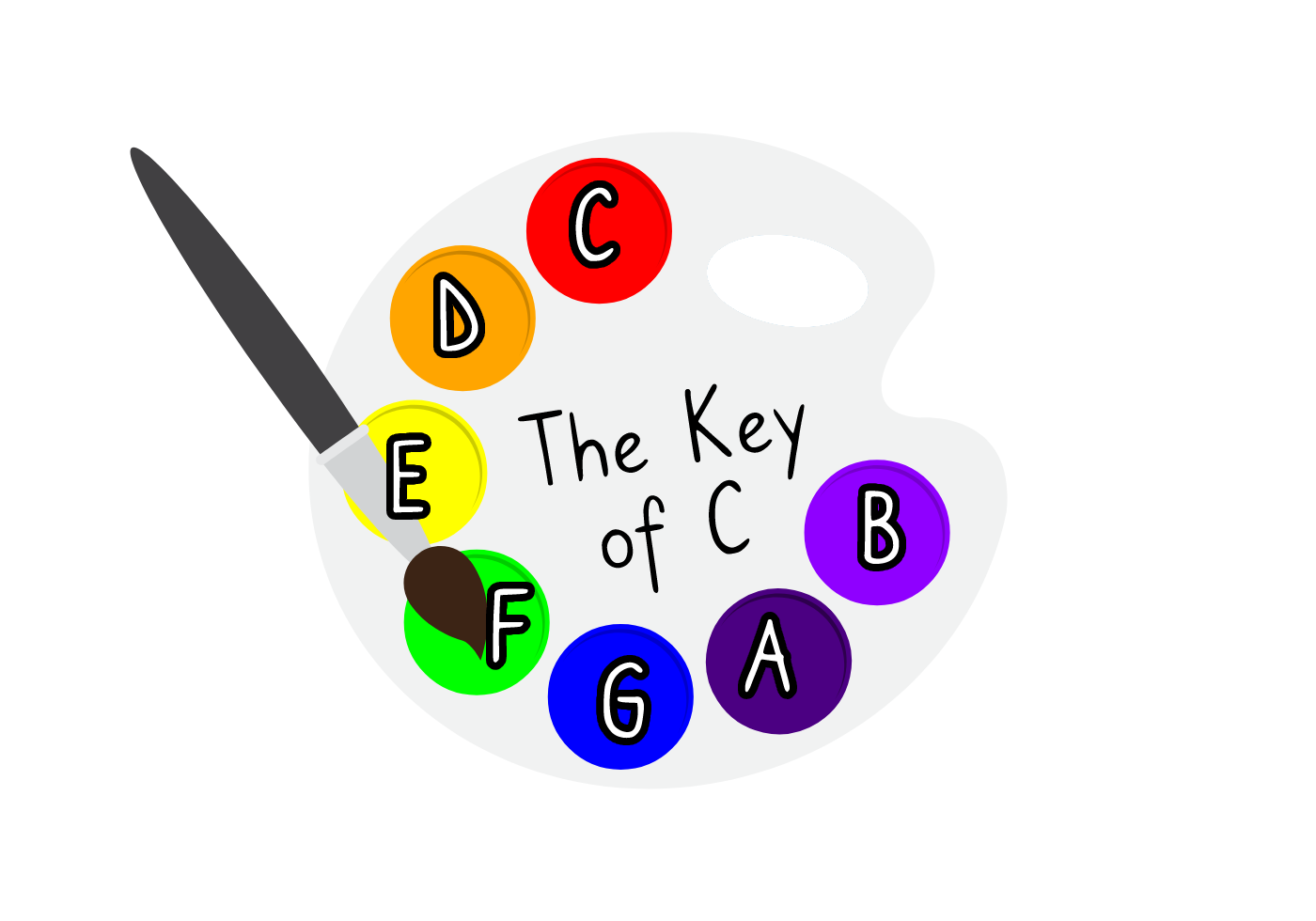
These palette of notes are what make up the “Key of C”. The note “C” is the tonic of the C Major scale and the key-note of the Key of C. (Elson’s Pocket Music Dictionary, p. 149)