Chapter 20
The Fretboard: Perfect 4ths, 5ths, and Octave Shapes
A chord is usually made up of 3 or more notes. But in the guitar/rock world, there is a chord called the Power Chord which is only 2 notes.
You’ll often hear that “chords come from scales”. And that’s a useful shortcut: the Major scale is a convenient place to find the notes that make up a chord (ie. the chord tones). But strictly speaking, a chord is built from intervals, not from a scale. The power chord comes from a single interval: the perfect 5th. And because a chord is built from a root with intervals stacked on it, you can start on any note, not just the first note of a scale. In other words, every note in the scale can be a root note for a chord. The root note is the note a chord is built on, and it’s the note the chord takes its name from. (A power chord built on C is written C5.)
Here is the shape to play a Perfect 5th (a Power Chord) on the 3 bass strings. You should use fingers 1 and 3 for this shape. You may need to utilize a guitar strap so that your wrist is in a good position to make the shape. Here it is as C5 with the root on the low E string, on the A string, and on the D string.
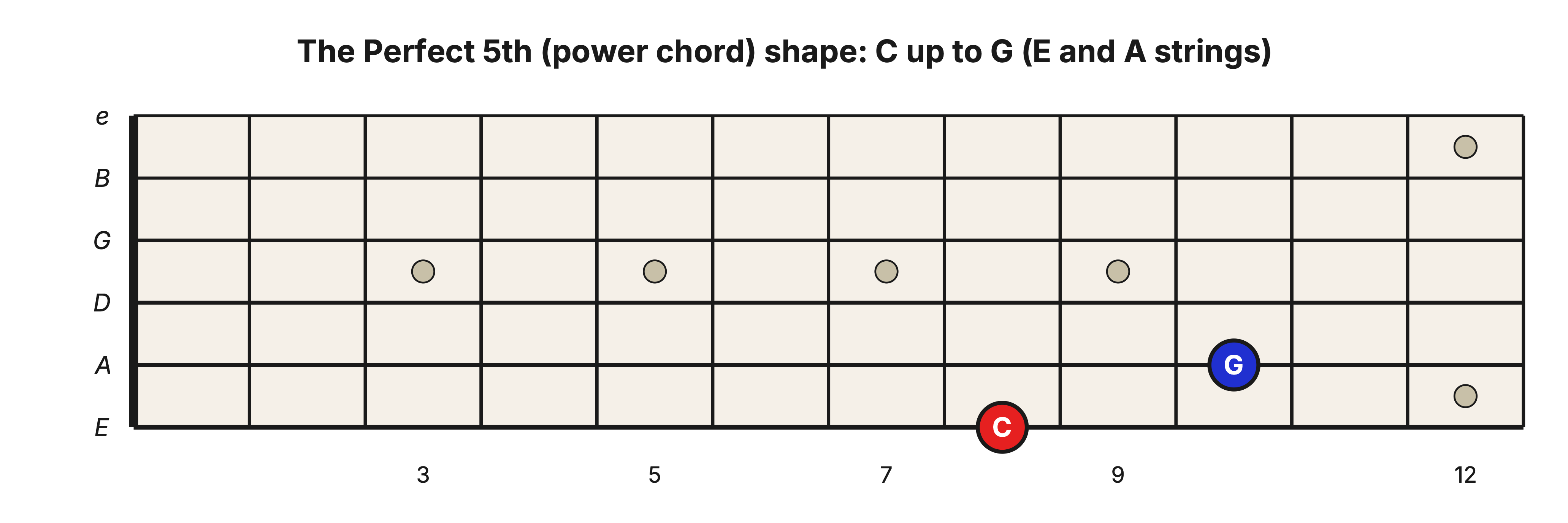
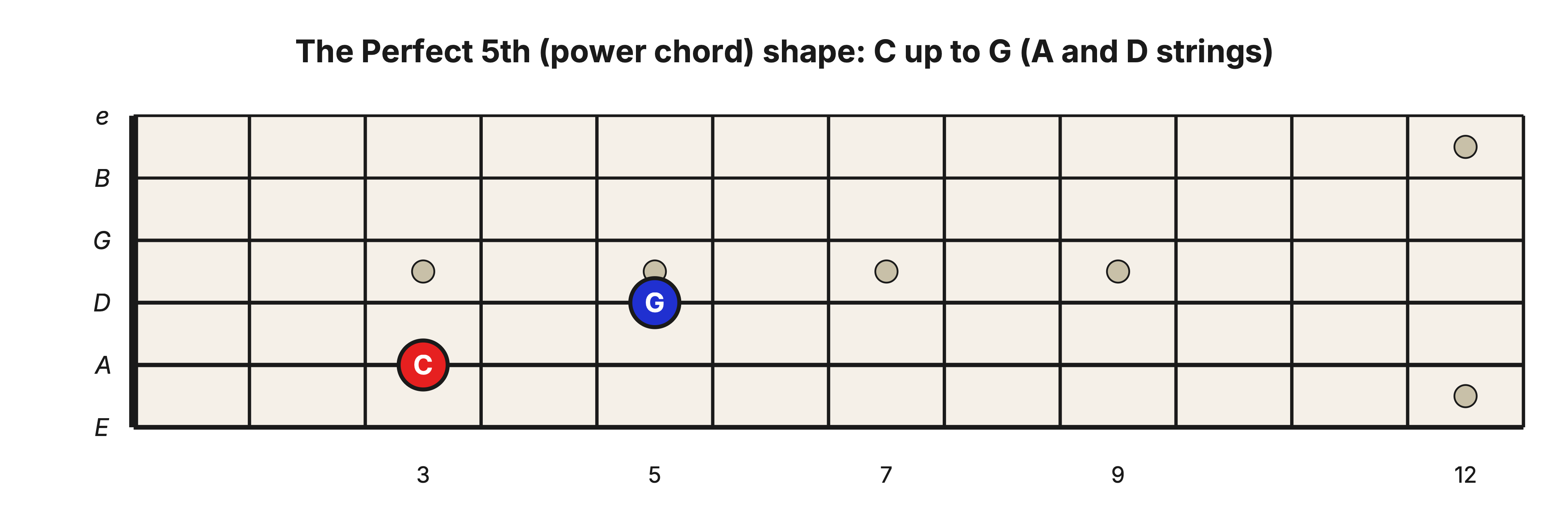
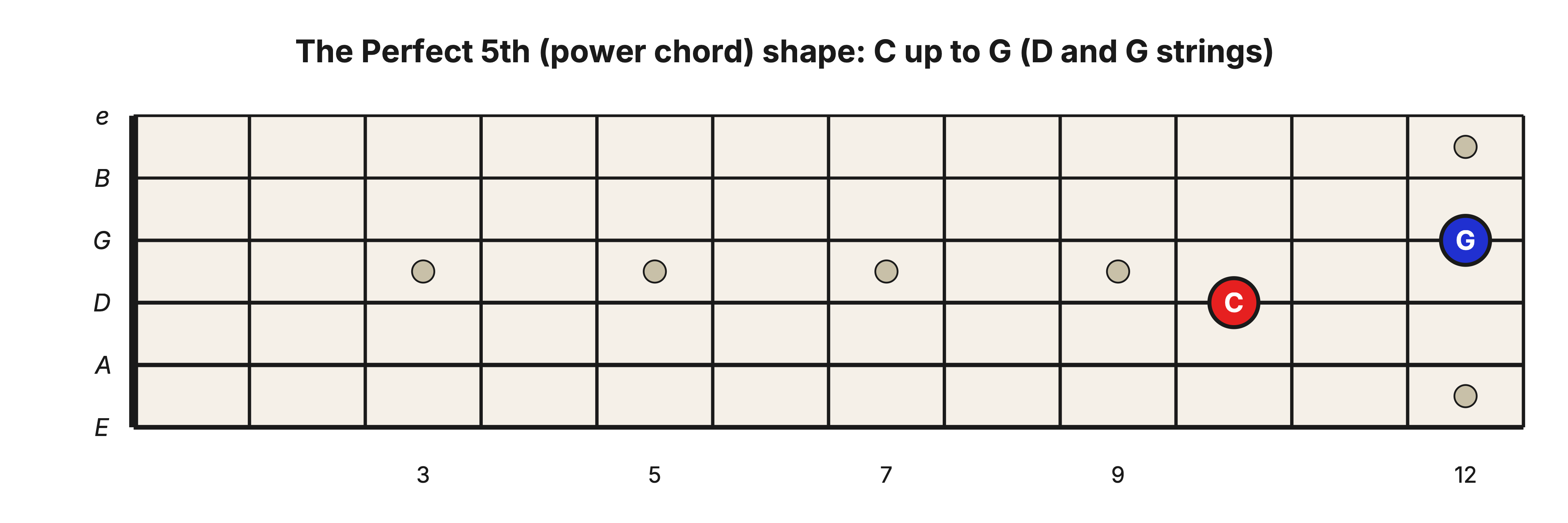
These power-chord shapes are movable. The shape is just an interval relationship (a root and its perfect 5th), so you can slide it anywhere along these bass strings. Wherever you put it, the lowest note (under your 1st finger) is the root, and that note’s name is the name of the power chord. This is where memorizing the notes on the E, A, and D strings (Chapter 16) pays off: find the root, and you instantly know which power chord you’re playing.
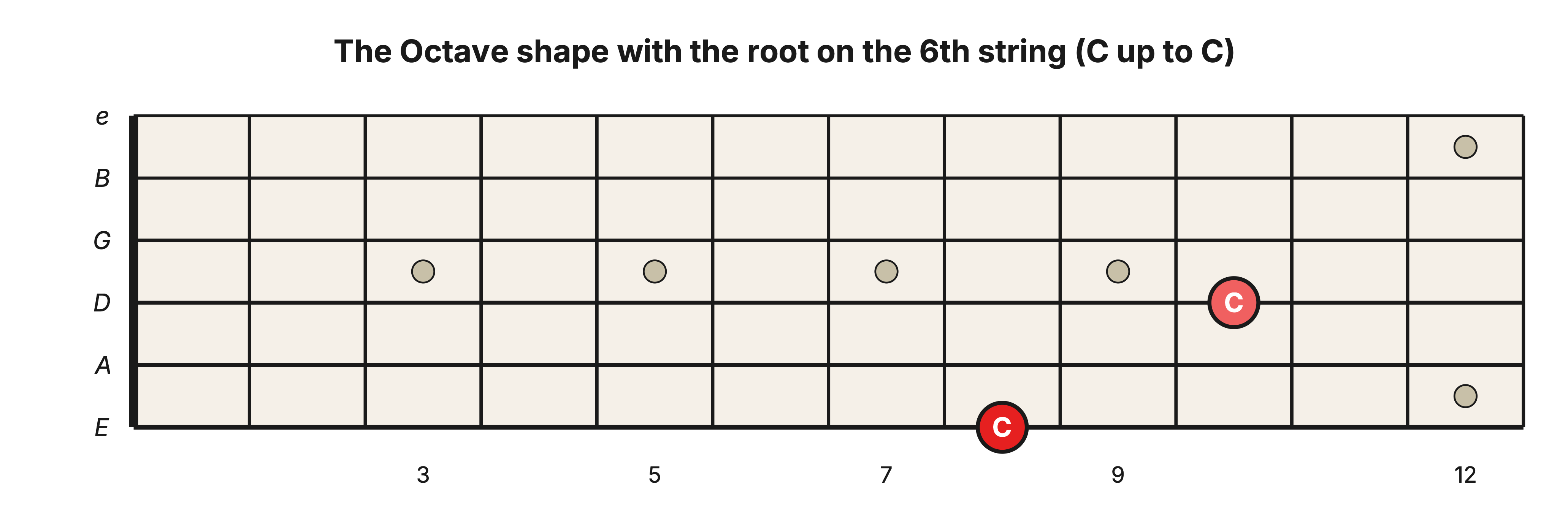
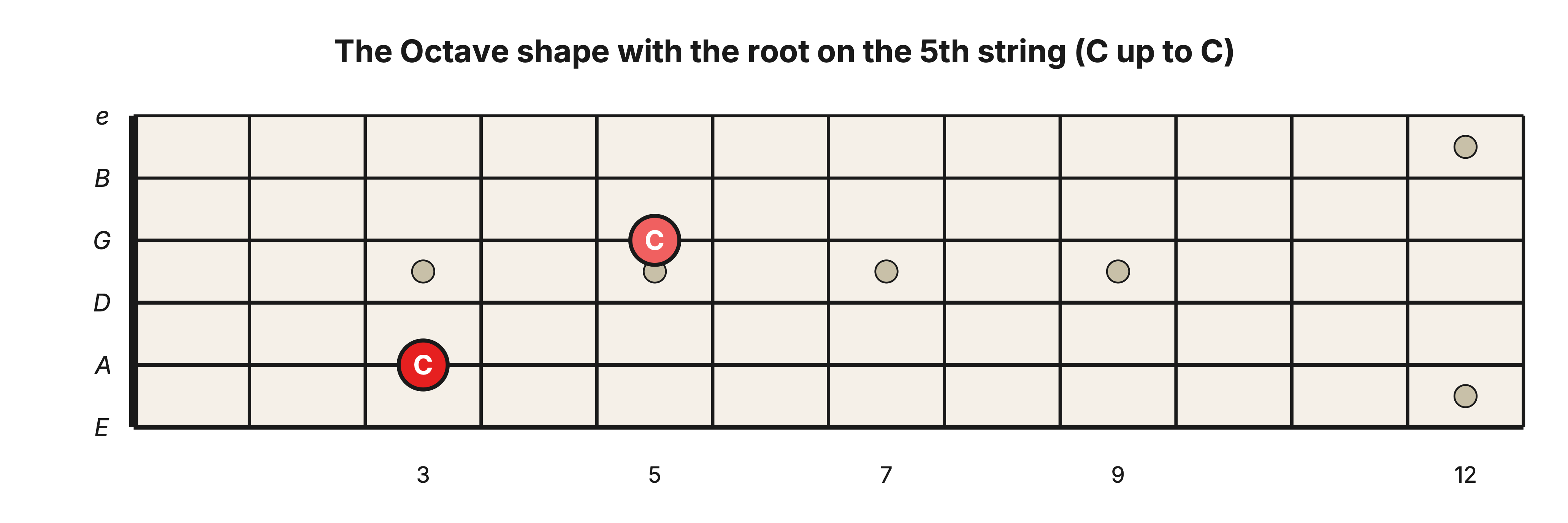
The Octave shape with root notes on the 6th or 5th strings.
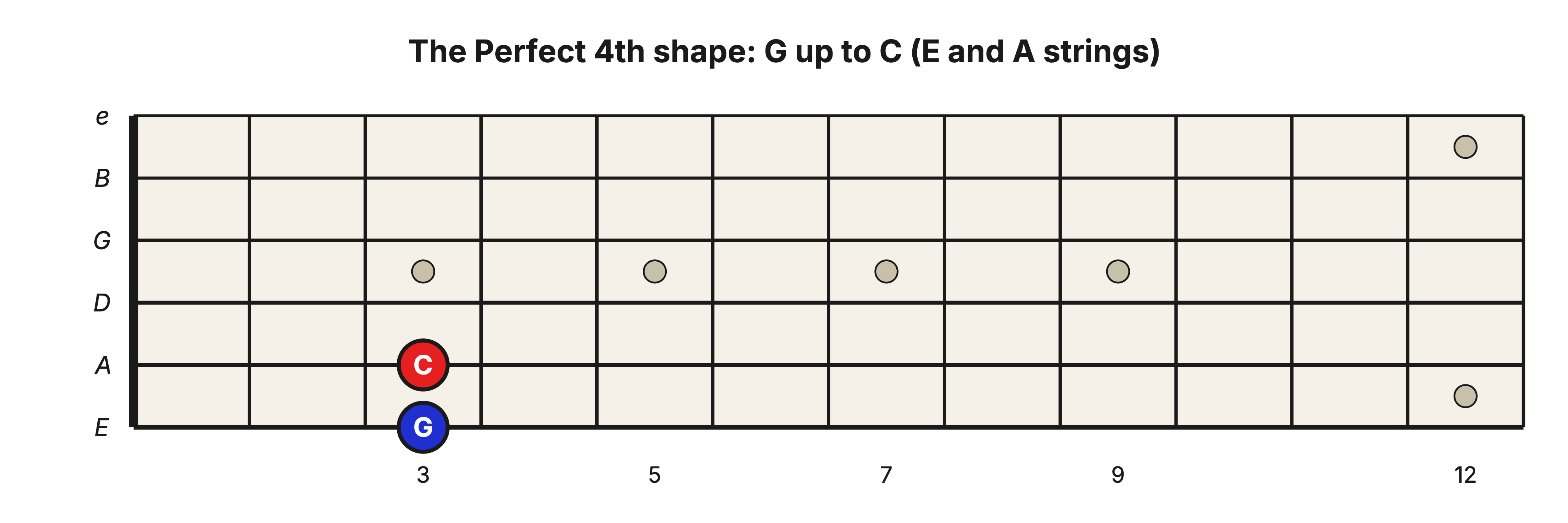
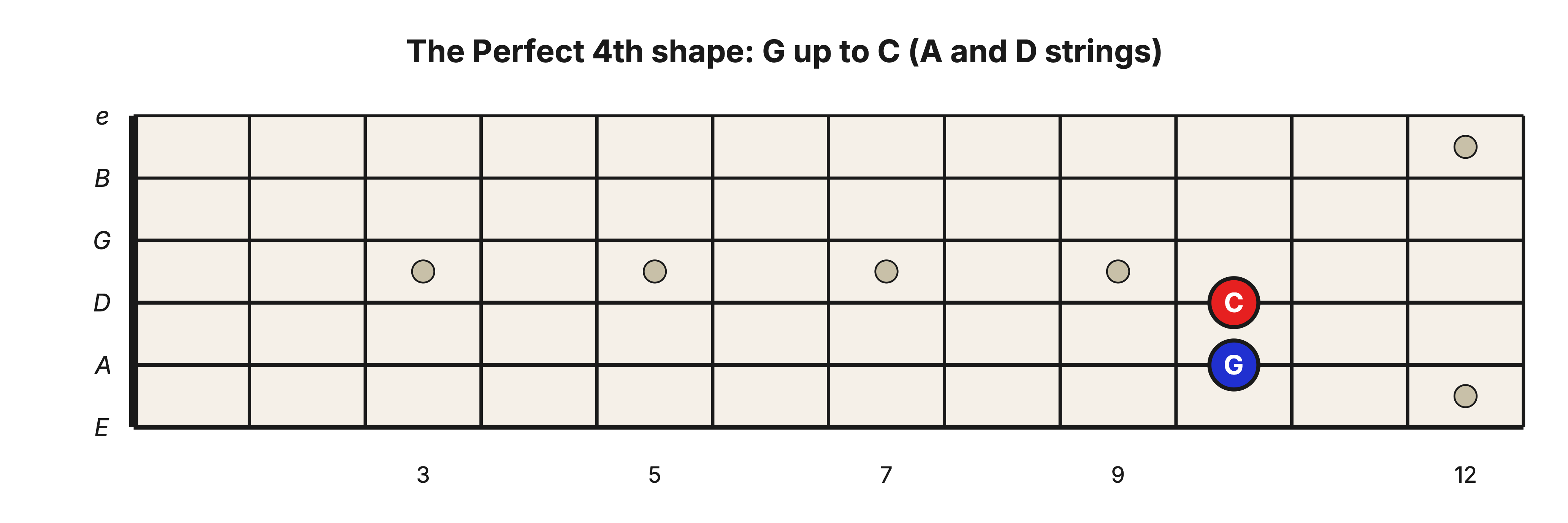
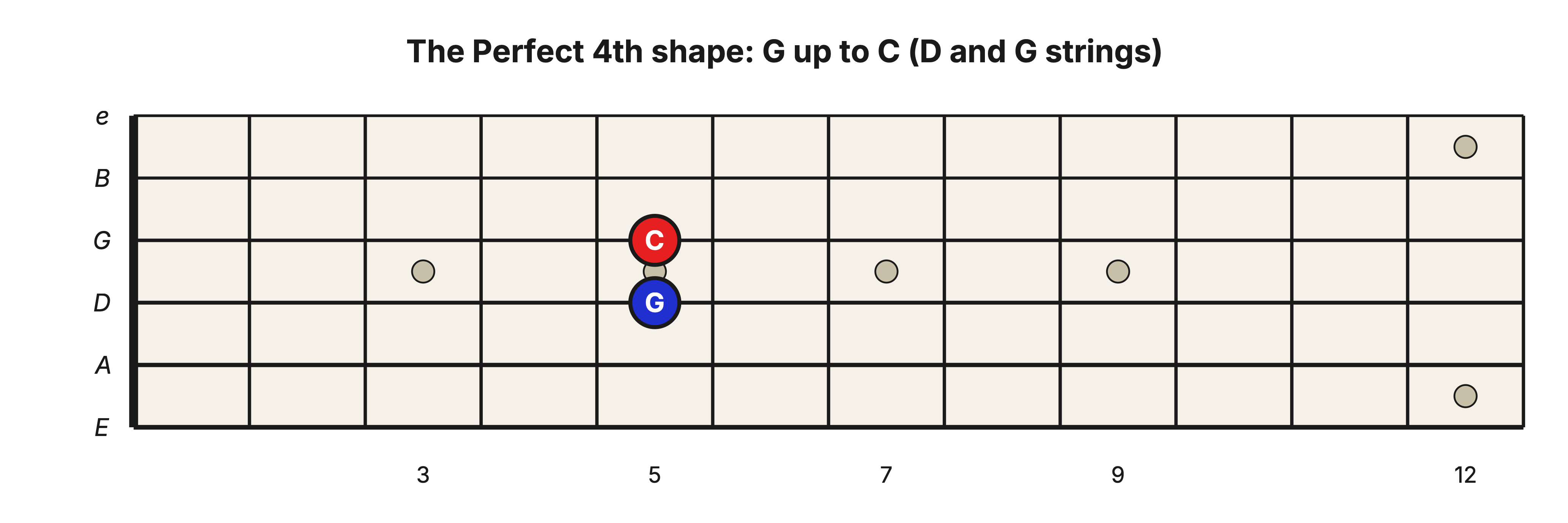
Here is the Perfect 4th shape. Because every neighboring pair of bass strings is tuned a Perfect 4th apart, the shape is the same on each pair: just two notes on the same fret of neighboring strings. Here is the same G up to C 4th on the E-A, A-D, and D-G string sets.