Chapter 6
The Fretboard: 12 Notes on a Single String and The Fret Markers
The fret markers (ie. dot inlays) or side dots help indicate when notes repeat. For example, the 12th fret of the low E string sounds like it “just fits” when played along with the open low E string (you play the 12th fret on the low E string and a friend plays the low E string unfretted). Therefore, the notes at the 12th fret get the same name as the open string. The 12th fret is usually marked with two dots. It’s like the fretboard starts again at the 12th fret but now everything is a “lighter shade” of the same notes.
This is also where the title of this chapter comes from. How many different notes are there on a single string before the names start repeating? Twelve. Here’s the part that trips people up: count the open string as your first note, the 1st fret as your second note, the 2nd fret as your third, and so on. By the time you reach the 12th fret you’ve played 13 notes but only 12 of them have different names. That 13th note, at the 12th fret, is where the open string’s name comes back as a “lighter shade”.
That’s “12 notes on a single string”, and it’s why the double dots land on the 12th fret.
This also helps explain the other fret markers. On many guitars and basses, the 3rd fret has a dot. Compare that note with the note exactly 12 frets higher, at the 15th fret. Do you notice how the 3rd-fret note sounds like a darker shade of the 15th-fret note?
Guitar examples
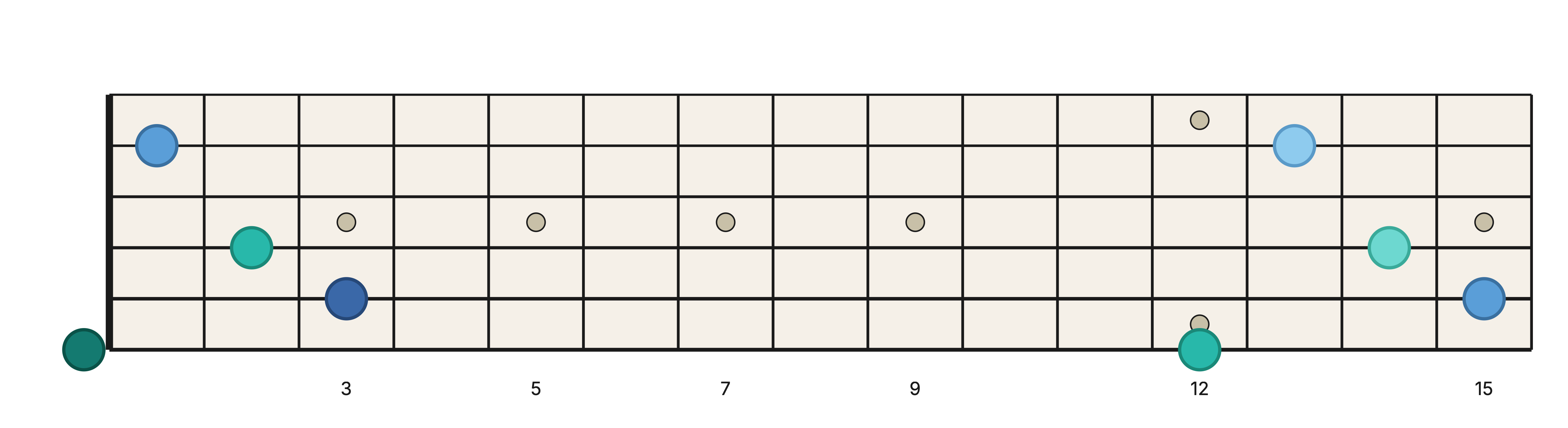
- The open E String and the 12th fret of the same string have the same name because they are 12 frets apart.
- The 3rd fret of the A string and the 15th fret of the A string have the same note name because they are 12 frets apart. Even though you don’t know the name of this note just yet, listen closely to how the note on the 15th fret sounds like a “lighter shade” of the note at the 3rd fret.
- The 2nd fret of the D string and the 14th fret of the D string have the same note name because they are 12 frets apart. The note at the 14th fret is a “lighter shade” of the note at the 2nd fret.
- The 1st fret of the B string and the 13th fret of the B string have the same note name because they are 12 frets apart. The note at the 13th fret is a “lighter shade” of the note at the 1st fret.
Bass examples—E, A, and D
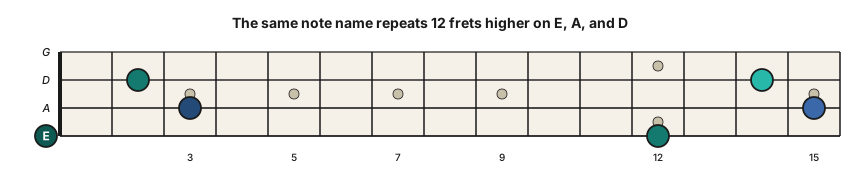
- The open E string and the 12th fret of the E string have the same note name.
- The 3rd fret of the A string and the 15th fret of the A string have the same note name.
- The 2nd fret of the D string and the 14th fret of the D string have the same note name.
The G string is shown because it is part of the bass, but Level 1 does not ask you to memorize its fret-by-fret note locations.
So where do all these dots live? On most guitars and basses, you’ll find single dots at the 3rd, 5th, 7th, and 9th frets, and double dots at the 12th fret. (The same pattern repeats higher up and that’s why there’s a dot at the 15th fret in the examples above.) Their job is simple: they let you find your place on the neck at a glance, so you don’t have to count up fret-by-fret from the bottom every time.
Guitar assignment
MUSIC THEORY AND THE FRETBOARD STUDENT ASSIGNMENT—Open String Names and Fretboard Logic
- From low to high (nose to toes), list the names of the 6 open strings: ___, ___, ___, ___, ___, ___.
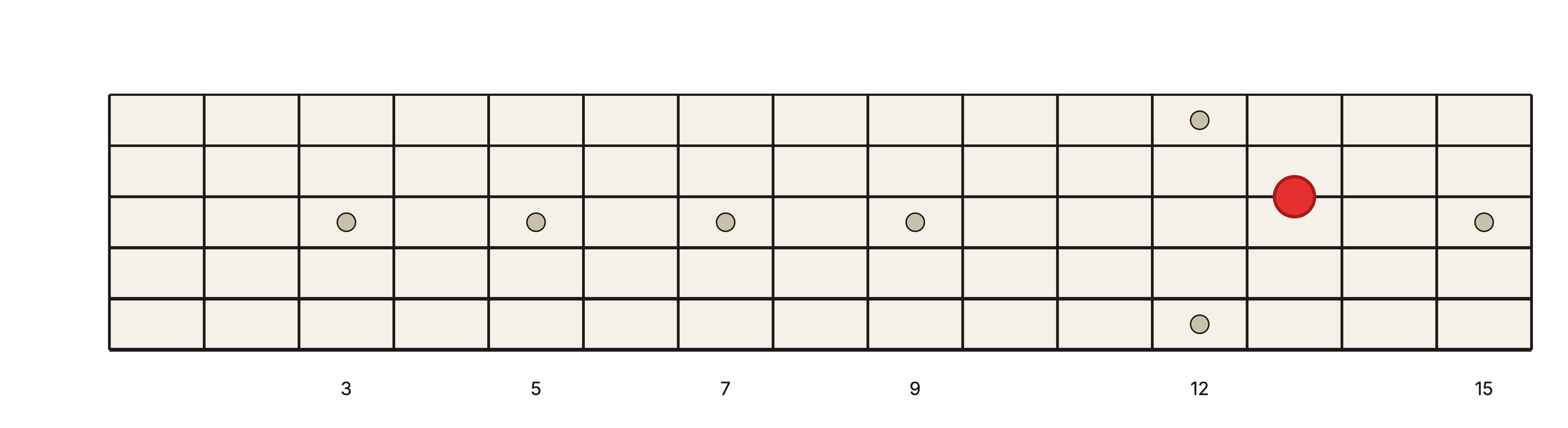
- If you play the 3rd fret of the 2nd string, which fret (on the same string) do you need to play in order to play the “lighter shade” of that same note? (Mark your answer on the fretboard.)
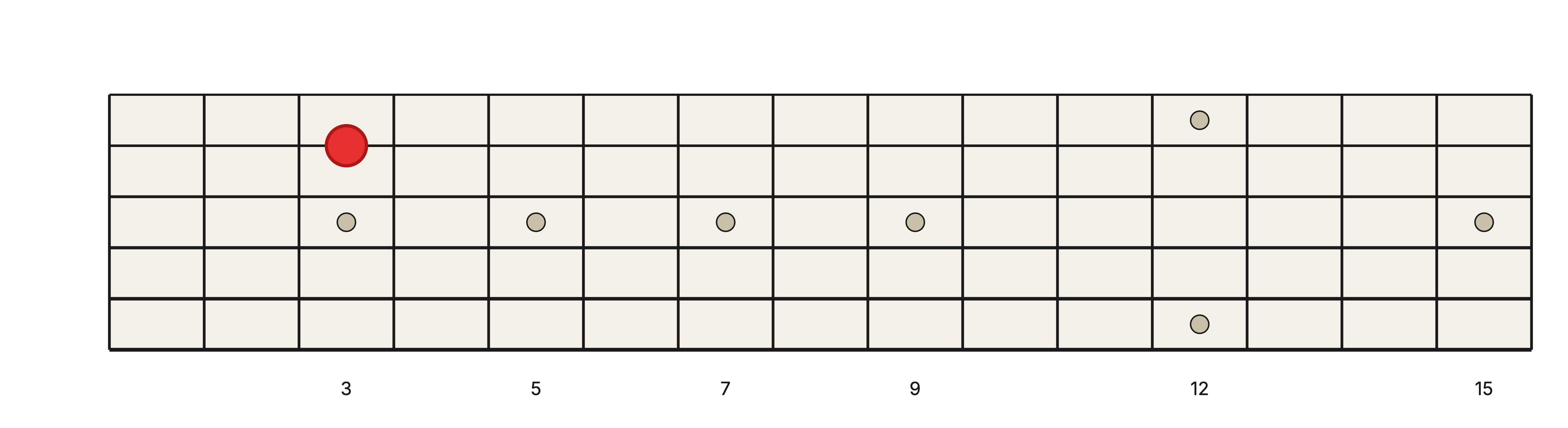
- If you play the 13th fret of the 3rd string, which fret (on the same string) do you need to play in order to play the “darker shade” of that same note? (Mark your answer on the fretboard.)
- If the name of the note that is produced by the 6th string is “E”, then what is the name of the note at the 12th fret on the same string? _______
- Take the 6 string names and put them in alphabetical order (but don’t put E twice): ___, ___, ___, ___, ___.
Bass assignment
MUSIC THEORY AND THE FRETBOARD STUDENT ASSIGNMENT—Open String Names and Fretboard Logic
- From low to high (nose to toes), list the four open strings of a standard bass: ___, ___, ___, ___.
- If you play the 3rd fret of the A string, which fret on the same string produces the “lighter shade” of that note? _______
- If you play the 14th fret of the D string, which fret on the same string produces the “darker shade” of that note? _______
- If the open E string is named E, what is the note at its 12th fret? _______
- Which three strings’ fretted note locations will you memorize in Level 1? ___, ___, ___.